Smart Online Assessments For Serious Exam Preparation
Start Assessment ➔

What do you want to learn today?

HomeTest › UKSSSC PPA (LEO) – Biology Domain | Mock Test Set 1
UKSSSC PPA (LEO) – Biology Domain | Mock Test Set 1

UKSSSC PPA (LEO) – Biology Domain | Mock Test Set 1

Prakash Joshi August 17, 2026124 views 100 Questions
Download PDF

Practice Mode

Solve instantly below. Get immediate feedback and detailed explanations without any timer.

Start Practice ↓
🎯

Full Exam Mode

Take this test in a strict timed environment with negative marking and detailed analytics.

Take Assessment →
Guest User
Score 0 / 100
Q1. Which of the following cell organelles is known as the "Suicidal Bag" of the cell due to the presence of hydrolytic enzymes? /हाइड्रोलाइटिक एंजाइमों की उपस्थिति के कारण निम्नलिखित में से किस कोशिका अंगक को कोशिका की "आत्मघाती थैली" (Suicidal Bag) के रूप में जाना जाता है?
Q2. The widely accepted "Fluid Mosaic Model" of the plasma membrane was proposed by: /प्लाज्मा झिल्ली (Plasma membrane) का व्यापक रूप से स्वीकृत "तरल मोज़ेक मॉडल" (Fluid Mosaic Model) किसके द्वारा प्रस्तावित किया गया था?
Q3. Match List-I (Cell Organelle) with List-II (Key Function):
List-I
A. Mitochondria
B. Ribosome
C. Centriole
D. Chloroplast
List-II
1. Protein synthesis
2. Photosynthesis
3. ATP generation (Respiration)
4. Spindle formation during cell division
/सूची-I (कोशिका अंगक) को सूची-II (मुख्य कार्य) के साथ सुमेलित करें:
सूची-I
A. माइटोकॉन्ड्रिया
B. राइबोसोम
C. तारककेन्द्र (Centriole)
D. लवक (Chloroplast)
सूची-II
1. प्रोटीन संश्लेषण
2. प्रकाश संश्लेषण
3. एटीपी निर्माण (श्वसन)
4. कोशिका विभाजन के दौरान स्पिंडल निर्माण
Q4. Assertion (A): Crossing over occurs during the pachytene stage of Prophase-I in meiosis.
Reason (R): Crossing over leads to the recombination of genetic material between non-sister chromatids of homologous chromosomes.
/अभिकथन (A): अर्धसूत्रीविभाजन (Meiosis) में प्रोफेज-I की पैकीटीन (Pachytene) अवस्था के दौरान क्रॉसिंग ओवर (Crossing over) होता है।
कारण (R): क्रॉसिंग ओवर समजात गुणसूत्रों के गैर-सिस्टर क्रोमैटिड्स के बीच आनुवंशिक सामग्री के पुनर्संयोजन (recombination) की ओर जाता है।
Q5. Proteins are linear polymers of amino acids linked together by which type of bond? /प्रोटीन किस प्रकार के बंधन (bond) द्वारा एक साथ जुड़े अमीनो एसिड के रैखिक बहुलक (polymers) हैं?
Q6. According to the Five Kingdom Classification by R.H. Whittaker, organisms that are prokaryotic and unicellular belong to which kingdom? /आर.एच. व्हिटेकर के पांच जगत वर्गीकरण के अनुसार, प्रोकैरियोटिक (Prokaryotic) और एककोशिकीय (unicellular) जीव किस जगत के अंतर्गत आते हैं?
Q7. Match List-I (Angiosperm Family) with List-II (Common Plant Example):
List-I
A. Brassicaceae
B. Fabaceae
C. Solanaceae
D. Poaceae
List-II
1. Pea, Gram, Pulses
2. Mustard, Cabbage
3. Wheat, Rice, Maize
4. Potato, Tomato, Brinjal
/सूची-I (आवृतबीजी कुल) को सूची-II (सामान्य पादप उदाहरण) के साथ सुमेलित करें:
सूची-I
A. ब्रेसीकेसी (Brassicaceae)
B. फेबेसी (Fabaceae)
C. सोलेनेसी (Solanaceae)
D. पोएसी (Poaceae)
सूची-II
1. मटर, चना, दालें
2. सरसों, पत्तागोभी
3. गेहूं, चावल, मक्का
4. आलू, टमाटर, बैंगन
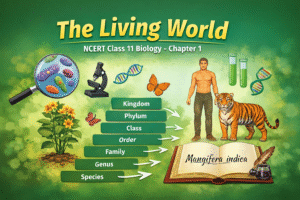
Q8. Assertion (A): In the scientific name Mangifera indica, "Mangifera" represents the genus and "indica" represents the specific epithet.
Reason (R): The system of providing a name with two components is called Binomial Nomenclature, introduced by Carolus Linnaeus.
/अभिकथन (A): वैज्ञानिक नाम मैंगिफेरा इंडिका (Mangifera indica) में, "मैंगिफेरा" जीनस का प्रतिनिधित्व करता है और "इंडिका" विशिष्ट विशेषण (specific epithet) का प्रतिनिधित्व करता है।
कारण (R): दो घटकों के साथ नाम प्रदान करने की प्रणाली को द्विपद नामकरण (Binomial Nomenclature) कहा जाता है, जिसे कैरोलस लिनियस ने पेश किया था।
Q9. The basic unit of classification in taxonomy is: /वर्गिकी (Taxonomy) में वर्गीकरण की मूल इकाई क्या है?
Q10. Which type of cell division is strictly responsible for the growth and repair of somatic (body) cells? /कायिक (somatic) कोशिकाओं की वृद्धि और मरम्मत के लिए किस प्रकार का कोशिका विभाजन कड़ाई से जिम्मेदार है?
Q11. In flowering plants, the process of transfer of pollen grains from the anther to the stigma is known as: /पुष्पीय पौधों में, परागकोष (anther) से वर्तिकाग्र (stigma) तक परागकणों के स्थानांतरण की प्रक्रिया को क्या कहा जाता है?
Q12. The vascular tissue "Phloem" is primarily responsible for the translocation of: /संवहनी ऊतक "फ्लोएम" (Phloem) मुख्य रूप से किसके स्थानांतरण (translocation) के लिए जिम्मेदार है?
Q13. Match List-I (Plant Reproduction Term) with List-II (Definition):
List-I
A. Apomixis
B. Parthenocarpy
C. Polyembryony
D. Double Fertilization
List-II
1. Presence of more than one embryo in a seed
2. Syngamy and Triple Fusion occurring together
3. Formation of fruit without fertilization
4. Seed formation without fertilization
/सूची-I (पादप प्रजनन शब्द) को सूची-II (परिभाषा) के साथ सुमेलित करें:
सूची-I
A. असंगजनन (Apomixis)
B. अनिषेकफलन (Parthenocarpy)
C. बहुभ्रूणता (Polyembryony)
D. दोहरा निषेचन (Double Fertilization)
सूची-II
1. एक बीज में एक से अधिक भ्रूण की उपस्थिति
2. सिनगेमी (Syngamy) और त्रिसंलयन (Triple Fusion) का एक साथ होना
3. निषेचन के बिना फल का निर्माण
4. निषेचन के बिना बीज का निर्माण
Q14. Assertion (A): Transpiration helps in cooling the plant leaves.
Reason (R): Evaporation of water from the stomata absorbs latent heat of vaporization, lowering the leaf surface temperature.
/अभिकथन (A): वाष्पोत्सर्जन (Transpiration) पौधे की पत्तियों को ठंडा करने में मदद करता है।
कारण (R): रंध्रों (stomata) से पानी का वाष्पीकरण वाष्पीकरण की गुप्त ऊष्मा को अवशोषित करता है, जिससे पत्ती की सतह का तापमान कम हो जाता है।
Q15. Which plant hormone (growth regulator) is primarily responsible for inducing fruit ripening? /कौन सा पादप हार्मोन (वृद्धि नियामक) मुख्य रूप से फलों के पकने (fruit ripening) को प्रेरित करने के लिए जिम्मेदार है?
Q16. In a typical dicotyledonous leaf, where are the stomata most abundantly found? /एक विशिष्ट द्विबीजपत्री (dicotyledonous) पत्ती में, रंध्र (stomata) बहुतायत में कहाँ पाए जाते हैं?
Q17. Match List-I (Part of Flower) with List-II (Biological Term):
List-I
A. Sepals
B. Petals
C. Stamens
D. Carpels (Pistil)
List-II
1. Gynoecium (Female reproductive part)
2. Androecium (Male reproductive part)
3. Corolla
4. Calyx
/सूची-I (फूल का भाग) को सूची-II (जैविक शब्द) के साथ सुमेलित करें:
सूची-I
A. बाह्यदल (Sepals)
B. पंखुड़ियाँ (Petals)
C. पुंकेसर (Stamens)
D. अंडप (Carpels/Pistil)
सूची-II
1. जायांग (मादा प्रजनन अंग)
2. पुमंग (नर प्रजनन अंग)
3. दलपुंज (Corolla)
4. बाह्यदलपुंज (Calyx)
Q18. Assertion (A): Respiration in plants is a continuous process occurring both day and night.
Reason (R): Photosynthesis requires light energy, but cellular respiration breaks down glucose to release ATP, which is needed constantly for survival.
/अभिकथन (A): पौधों में श्वसन एक सतत प्रक्रिया है जो दिन और रात दोनों समय होती है।
कारण (R): प्रकाश संश्लेषण के लिए प्रकाश ऊर्जा की आवश्यकता होती है, लेकिन कोशिकीय श्वसन एटीपी (ATP) जारी करने के लिए ग्लूकोज को तोड़ता है, जो जीवित रहने के लिए लगातार आवश्यक है।
Q19. The arrangement of flowers on the floral axis is biologically termed as: /पुष्पीय अक्ष पर फूलों की व्यवस्था को जैविक रूप से क्या कहा जाता है?
Q20. In the process of Double Fertilization, "Triple Fusion" leads to the formation of the: /दोहरे निषेचन (Double Fertilization) की प्रक्रिया में, "त्रिसंलयन" (Triple Fusion) के कारण किसका निर्माण होता है?
Q21. Which gas is primarily responsible for the depletion of the ozone layer in the stratosphere? /समताप मंडल में ओजोन परत के क्षरण के लिए मुख्य रूप से कौन सी गैस जिम्मेदार है?
Q22. The gradual increase in the concentration of toxic substances like DDT at successive trophic levels of a food chain is called: /खाद्य श्रृंखला के क्रमिक पोषी स्तरों (trophic levels) पर डीडीटी (DDT) जैसे विषाक्त पदार्थों की सांद्रता में क्रमिक वृद्धि क्या कहलाती है?
Q23. Match List-I (Applied Biology Term) with List-II (Field of Study/Production):
List-I
A. Apiculture
B. Sericulture
C. Green Revolution
D. Eutrophication
List-II
1. Rearing of silkworms for silk
2. Nutrient enrichment of water bodies
3. Beekeeping for honey and wax
4. High-yielding varieties of crops (wheat/rice)
/सूची-I (अनुप्रयुक्त जीव विज्ञान शब्द) को सूची-II (अध्ययन/उत्पादन का क्षेत्र) के साथ सुमेलित करें:
सूची-I
A. एपीकल्चर (Apiculture)
B. सेरीकल्चर (Sericulture)
C. हरित क्रांति (Green Revolution)
D. सुपोषण (Eutrophication)
सूची-II
1. रेशम के लिए रेशम के कीड़ों का पालन
2. जल निकायों का पोषक संवर्धन (Nutrient enrichment)
3. शहद और मोम के लिए मधुमक्खी पालन
4. फसलों (गेहूं/चावल) की उच्च उपज देने वाली किस्में
Q24. Assertion (A): Acid rain is highly destructive to monuments, forests, and aquatic life.
Reason (R): Acid rain is primarily caused by the release of Sulfur dioxide (SO2) and Nitrogen oxides (NOx) into the atmosphere from burning fossil fuels.
/अभिकथन (A): अम्लीय वर्षा (Acid rain) स्मारकों, जंगलों और जलीय जीवन के लिए अत्यधिक विनाशकारी है।
कारण (R): अम्लीय वर्षा मुख्य रूप से जीवाश्म ईंधन को जलाने से वायुमंडल में सल्फर डाइऑक्साइड (SO2) और नाइट्रोजन ऑक्साइड (NOx) की रिहाई के कारण होती है।
Q25. Which of the following represents the correct sequence of major Greenhouse Gases according to their contribution to global warming (highest to lowest)? /ग्लोबल वार्मिंग में उनके योगदान (उच्चतम से निम्नतम) के अनुसार प्रमुख ग्रीनहाउस गैसों के सही अनुक्रम का प्रतिनिधित्व निम्नलिखित में से कौन करता है?
Q26. Which bacteria establish a symbiotic relationship with the root nodules of leguminous plants to fix atmospheric nitrogen? /कौन सा बैक्टीरिया वायुमंडलीय नाइट्रोजन को ठीक (fix) करने के लिए फलीदार पौधों की जड़ ग्रंथियों (root nodules) के साथ सहजीवी संबंध स्थापित करता है?
Q27. Match List-I (Pollution Control Device) with List-II (Target Pollutant):
List-I
A. Electrostatic Precipitator
B. Scrubber
C. Catalytic Converter
D. Incinerator
List-II
1. Unburnt hydrocarbons and Carbon monoxide
2. Particulate matter from thermal power plants
3. Hospital and hazardous waste
4. Sulfur dioxide gas
/सूची-I (प्रदूषण नियंत्रण उपकरण) को सूची-II (लक्षित प्रदूषक) के साथ सुमेलित करें:
सूची-I
A. इलेक्ट्रोस्टैटिक प्रीसिपिटेटर
B. स्क्रबर (Scrubber)
C. कैटेलिटिक कनवर्टर
D. भस्मक (Incinerator)
सूची-II
1. बिना जले हाइड्रोकार्बन और कार्बन मोनोऑक्साइड
2. थर्मल पावर प्लांट से पर्टिकुलेट मैटर (Particulate matter)
3. अस्पताल और खतरनाक अपशिष्ट
4. सल्फर डाइऑक्साइड गैस
Q28. Assertion (A): The cultivation of Bt Cotton reduces the reliance on chemical pesticides.
Reason (R): Bt Cotton contains a gene from the bacterium Bacillus thuringiensis that produces a protein toxic to bollworm pests.
/अभिकथन (A): बीटी कपास (Bt Cotton) की खेती रासायनिक कीटनाशकों पर निर्भरता को कम करती है।
कारण (R): बीटी कपास में बैक्टीरिया बैसिलस थुरिंजिएंसिस (Bacillus thuringiensis) का एक जीन होता है जो बॉलवर्म कीटों के लिए विषाक्त प्रोटीन पैदा करता है।
Q29. Silk is obtained from which stage of the silkworm's life cycle during sericulture? /रेशम उत्पादन (sericulture) के दौरान रेशम के कीड़े के जीवन चक्र के किस चरण से रेशम प्राप्त किया जाता है?
Q30. In the nitrogen cycle, which biological process converts soil nitrates back into atmospheric nitrogen gas (N2)? /नाइट्रोजन चक्र में, कौन सी जैविक प्रक्रिया मिट्टी के नाइट्रेट को वापस वायुमंडलीय नाइट्रोजन गैस (N2) में परिवर्तित करती है?
Q31. In which sub-stage of Prophase-I of Meiosis does "Crossing over" between homologous chromosomes occur? /अर्धसूत्रीविभाजन (Meiosis) के प्रोफेज-I की किस उप-अवस्था में समजात गुणसूत्रों के बीच "क्रॉसिंग ओवर" (Crossing over) होता है?
Q32. According to R.H. Whittaker’s five-kingdom classification, which kingdom contains unicellular eukaryotes? /आर.एच. व्हिटेकर के पांच-जगत वर्गीकरण के अनुसार, किस जगत में एककोशिकीय यूकेरियोट्स (unicellular eukaryotes) शामिल हैं?
Q33. Match List-I (Cell Organelle) with List-II (Key Function):
List-I
A. Golgi Apparatus
B. Lysosome
C. Mitochondria
D. Smooth ER
List-II
1. ATP Synthesis
2. Lipid Synthesis
3. Packaging and secretion
4. Intracellular digestion
/सूची-I (कोशिका अंगक) को सूची-II (मुख्य कार्य) के साथ सुमेलित करें:
सूची-I
A. गॉल्जी उपकरण
B. लाइसोसोम
C. माइटोकॉन्ड्रिया
D. चिकनी अंतर्द्रव्यी जालिका (SER)
सूची-II
1. ATP संश्लेषण
2. लिपिड संश्लेषण
3. पैकेजिंग और स्राव
4. अंतःकोशिकीय पाचन
Q34. Assertion (A): Cyanobacteria (Blue-green algae) are used as biofertilizers in paddy fields.
Reason (R): They possess specialized cells called Heterocysts which help in nitrogen fixation under anaerobic conditions.
/अभिकथन (A): साइनोबैक्टीरिया (नीले-हरे शैवाल) का उपयोग धान के खेतों में जैव-उर्वरक के रूप में किया जाता है।
कारण (R): उनमें हेटरोसिस्ट (Heterocysts) नामक विशेष कोशिकाएँ होती हैं जो अवायवीय परिस्थितियों में नाइट्रोजन स्थिरीकरण (nitrogen fixation) में मदद करती हैं।
Q35. Which type of cell wall is characteristic of Gram-positive bacteria? /ग्राम-पॉजिटिव (Gram-positive) बैक्टीरिया की कोशिका भित्ति की क्या विशेषता है?
Q36. Which of the following algae is commercially used to produce "Agar-agar"? /निम्नलिखित में से किस शैवाल का उपयोग व्यावसायिक रूप से "अगार-अगार" (Agar-agar) के उत्पादन के लिए किया जाता है?
Q37. Match List-I (Animal Phylum) with List-II (Excretory Organ):
List-I
A. Platyhelminthes
B. Annelida
C. Arthropoda (Insects)
D. Hemichordata
List-II
1. Malpighian tubules
2. Flame cells
3. Proboscis gland
4. Nephridia
/सूची-I (जंतु संघ) को सूची-II (उत्सर्जी अंग) के साथ सुमेलित करें:
सूची-I
A. प्लैटीहेल्मिन्थीज
B. एनेलिडा
C. आर्थ्रोपोडा (कीड़े)
D. हेमीकॉर्डेटा
सूची-II
1. माल्पीघियन नलिकाएं
2. फ्लेम कोशिकाएं (Flame cells)
3. प्रोबोसिस ग्रंथि
4. नेफ्रिडिया
Q38. Assertion (A): Viruses are obligate intracellular parasites and cannot multiply outside a living host.
Reason (R): Viruses lack their own metabolic machinery and ribosomes for protein synthesis.
/अभिकथन (A): वायरस अविकल्पी अंतःकोशिकीय परजीवी (obligate intracellular parasites) होते हैं और एक जीवित मेजबान के बाहर गुणा नहीं कर सकते हैं।
कारण (R): वायरस में प्रोटीन संश्लेषण के लिए अपनी स्वयं की चयापचय मशीनरी (metabolic machinery) और राइबोसोम की कमी होती है।
Q39. The protein coat of a virus that encloses its genetic material is called: /किसी वायरस का प्रोटीन आवरण जो उसकी आनुवंशिक सामग्री को घेरता है, क्या कहलाता है?
Q40. Which of the following classes of fungi is commonly known as "Sac fungi"? /निम्नलिखित में से कवकों के किस वर्ग को आमतौर पर "सैक फंगी" (Sac fungi) के रूप में जाना जाता है?
Q41. Which of the following codons acts as the universally accepted "Start Codon" during translation? /अनुवाद (Translation) के दौरान निम्नलिखित में से कौन सा कोडॉन सार्वभौमिक रूप से स्वीकृत "प्रारंभ कोडॉन" (Start Codon) के रूप में कार्य करता है?
Q42. What is the expected phenotypic ratio in a typical Mendelian dihybrid cross (F2 generation)? /विशिष्ट मेंडेलियन डायहाइब्रिड क्रॉस (F2 पीढ़ी) में अपेक्षित फेनोटाइपिक अनुपात क्या है?
Q43. Match List-I (Genetic Disorder) with List-II (Chromosomal Abnormality):
List-I
A. Down Syndrome
B. Klinefelter Syndrome
C. Turner Syndrome
D. Patau Syndrome
List-II
1. Trisomy 13
2. Monosomy X (45, XO)
3. Trisomy 21
4. XXY composition (47, XXY)
/सूची-I (आनुवंशिक विकार) को सूची-II (गुणसूत्री असामान्यता) के साथ सुमेलित करें:
सूची-I
A. डाउन सिंड्रोम
B. क्लाइनफेल्टर सिंड्रोम
C. टर्नर सिंड्रोम
D. पटाऊ सिंड्रोम
सूची-II
1. ट्राइसॉमी 13
2. मोनोसोमी X (45, XO)
3. ट्राइसॉमी 21
4. XXY संयोजन (47, XXY)
Q44. Assertion (A): DNA replication is described as semi-conservative.
Reason (R): In a newly synthesized DNA molecule, one strand is derived from the parent and the other is newly formed.
/अभिकथन (A): डीएनए प्रतिकृति (DNA replication) को अर्ध-संरक्षी (semi-conservative) के रूप में वर्णित किया गया है।
कारण (R): एक नव संश्लेषित डीएनए अणु में, एक स्ट्रैंड माता-पिता (parent) से प्राप्त होता है और दूसरा नया बनता है।
Q45. Which enzyme is responsible for unwinding the DNA double helix during replication? /प्रतिकृति (replication) के दौरान डीएनए डबल हेलिक्स को खोलने (unwinding) के लिए कौन सा एंजाइम जिम्मेदार है?
Q46. In genetic interactions, what is the phenotypic ratio of Dominant Epistasis in the F2 generation? /आनुवंशिक अंतःक्रियाओं में, F2 पीढ़ी में प्रबल एपिस्टेसिस (Dominant Epistasis) का फेनोटाइपिक अनुपात क्या होता है?
Q47. Match List-I (Molecular process) with List-II (Key Component/Enzyme):
List-I
A. Transcription
B. Translation
C. Okazaki fragments
D. Joining of DNA strands
List-II
1. DNA Ligase
2. RNA Polymerase
3. Ribosomes
4. Lagging strand
/सूची-I (आणविक प्रक्रिया) को सूची-II (मुख्य घटक/एंजाइम) के साथ सुमेलित करें:
सूची-I
A. अनुलेखन (Transcription)
B. अनुवाद (Translation)
C. ओकाजाकी खंड
D. डीएनए स्ट्रैंड्स को जोड़ना
सूची-II
1. डीएनए लाइगेज
2. आरएनए पॉलीमरेज़
3. राइबोसोम
4. लैगिंग स्ट्रैंड
Q48. Assertion (A): Sickle cell anemia is an example of a point mutation.
Reason (R): It occurs due to the substitution of Glutamic acid by Valine at the sixth position of the beta-globin chain.
/अभिकथन (A): सिकल सेल एनीमिया बिंदु उत्परिवर्तन (point mutation) का एक उदाहरण है।
कारण (R): यह बीटा-ग्लोबिन श्रृंखला की छठी स्थिति में ग्लूटामिक एसिड के वेलिन (Valine) द्वारा प्रतिस्थापन के कारण होता है।
Q49. The "Operon concept" to explain gene regulation in prokaryotes was proposed by: /प्रोकैरियोट्स में जीन विनियमन (gene regulation) की व्याख्या करने के लिए "ओपेरॉन अवधारणा" (Operon concept) किसके द्वारा प्रस्तावित की गई थी?
Q50. Which type of RNA is responsible for bringing amino acids to the ribosome during protein synthesis? /प्रोटीन संश्लेषण के दौरान राइबोसोम में अमीनो एसिड लाने के लिए किस प्रकार का आरएनए (RNA) जिम्मेदार है?
Q51. In C4 plants, what is the primary acceptor of CO2 in the mesophyll cells? /C4 पौधों में, मेसोफिल (पर्णमध्योतक) कोशिकाओं में CO2 का प्राथमिक ग्राही (acceptor) क्या है?
Q52. Which plant hormone is primarily responsible for the phenomenon of "Apical Dominance"? /कौन सा पादप हार्मोन मुख्य रूप से "शीर्षस्थ प्रभाविता" (Apical Dominance) की घटना के लिए जिम्मेदार है?
Q53. Match List-I (Phytohormone) with List-II (Major Function):
List-I
A. Ethylene
B. Abscisic Acid (ABA)
C. Cytokinin
D. Gibberellin
List-II
1. Stem elongation (internode)
2. Fruit ripening
3. Stress hormone (stomata closure)
4. Promotes cell division
/सूची-I (पादप हार्मोन) को सूची-II (मुख्य कार्य) के साथ सुमेलित करें:
सूची-I
A. एथिलीन
B. एब्सिसिक एसिड (ABA)
C. साइटोकाइनिन
D. जिबरेलिन
सूची-II
1. तने का बढ़ाव (इंटर्नोड)
2. फलों का पकना
3. तनाव हार्मोन (स्टोमेटा बंद करना)
4. कोशिका विभाजन को बढ़ावा देना
Q54. Assertion (A): CAM plants keep their stomata open during the night and closed during the day.
Reason (R): This adaptation helps them minimize water loss via transpiration in hot, arid environments while still fixing CO2.
/अभिकथन (A): CAM पौधे अपने रंध्र (stomata) रात में खुले रखते हैं और दिन के समय बंद रखते हैं।
कारण (R): यह अनुकूलन उन्हें गर्म, शुष्क वातावरण में CO2 को स्थिर करते हुए वाष्पोत्सर्जन (transpiration) के माध्यम से पानी के नुकसान को कम करने में मदद करता है।
Q55. The "10 Percent Law" regarding the transfer of energy in a food chain was given by: /खाद्य श्रृंखला में ऊर्जा के हस्तांतरण के संबंध में "10 प्रतिशत का नियम" किसके द्वारा दिया गया था?
Q56. Eutrophication of a water body is primarily caused by the excessive influx of which nutrients? /जल निकाय का सुपोषण (Eutrophication) मुख्य रूप से किन पोषक तत्वों के अत्यधिक प्रवाह के कारण होता है?
Q57. Match List-I (Population Interaction) with List-II (Species Effects A, B):
List-I
A. Mutualism
B. Commensalism
C. Parasitism
D. Amensalism
List-II
1. (+, -)
2. (-, 0)
3. (+, +)
4. (+, 0)
/सूची-I (जनसंख्या सहभागिता) को सूची-II (प्रजाति प्रभाव A, B) के साथ सुमेलित करें:
सूची-I
A. सहोपकारिता (Mutualism)
B. सहभोजिता (Commensalism)
C. परजीविता (Parasitism)
D. असहभोजिता (Amensalism)
सूची-II
1. (+, -)
2. (-, 0)
3. (+, +)
4. (+, 0)
Q58. Assertion (A): Tropical rainforests exhibit the highest levels of biodiversity on Earth.
Reason (R): Tropical regions have remained relatively undisturbed for millions of years and receive more solar energy, leading to higher productivity.
/अभिकथन (A): उष्णकटिबंधीय वर्षावन (Tropical rainforests) पृथ्वी पर जैव विविधता के उच्चतम स्तर को प्रदर्शित करते हैं।
कारण (R): उष्णकटिबंधीय क्षेत्र लाखों वर्षों से अपेक्षाकृत अबाधित (undisturbed) रहे हैं और अधिक सौर ऊर्जा प्राप्त करते हैं, जिससे उच्च उत्पादकता होती है।
Q59. A species whose presence and role within an ecosystem has a disproportionate effect on other organisms within the system is known as a: /एक प्रजाति जिसकी पारिस्थितिकी तंत्र में उपस्थिति और भूमिका का तंत्र के अन्य जीवों पर असंगत (disproportionate) रूप से बड़ा प्रभाव पड़ता है, क्या कहलाती है?
Q60. The historic "Montreal Protocol" signed in 1987 is associated with: /1987 में हस्ताक्षरित ऐतिहासिक "मॉन्ट्रियल प्रोटोकॉल" किससे संबंधित है?
Q61. Which human blood group is known as the "Universal Acceptor"? /किस मानव रक्त समूह को "यूनिवर्सल एक्सेप्टर" (सार्वभौमिक ग्राही) के रूप में जाना जाता है?
Q62. In the human male reproductive system, the Leydig cells (interstitial cells) are responsible for the secretion of which hormone? /मानव पुरुष प्रजनन प्रणाली में, लेडिग कोशिकाएं (Leydig cells) किस हार्मोन के स्राव के लिए जिम्मेदार हैं?
Q63. Match List-I (Digestive Enzyme) with List-II (Substrate it acts upon):
List-I
A. Amylase
B. Pepsin
C. Lipase
D. Nuclease
List-II
1. Fats/Lipids
2. Nucleic acids
3. Starch/Carbohydrates
4. Proteins
/सूची-I (पाचन एंजाइम) को सूची-II (सब्सट्रेट जिस पर यह कार्य करता है) के साथ सुमेलित करें:
सूची-I
A. एमाइलेज
B. पेप्सिन
C. लाइपेज
D. न्यूक्लियस
सूची-II
1. वसा/लिपिड
2. न्यूक्लिक एसिड
3. स्टार्च/कार्बोहाइड्रेट
4. प्रोटीन
Q64. Assertion (A): The Sinoatrial (SA) Node is called the natural pacemaker of the human heart.
Reason (R): The SA Node is capable of generating the maximum number of action potentials per minute (70-75/min) and controls the rhythmic contraction of the heart.
/अभिकथन (A): सिनोएट्रियल (SA) नोड को मानव हृदय का प्राकृतिक पेसमेकर कहा जाता है।
कारण (R): SA नोड प्रति मिनट (70-75/मिनट) अधिकतम संख्या में एक्शन पोटेंशिअल उत्पन्न करने में सक्षम है और हृदय के लयबद्ध संकुचन को नियंत्रित करता है।
Q65. What is the structural and functional unit of the human kidney? /मानव गुर्दे (kidney) की संरचनात्मक और कार्यात्मक इकाई क्या है?
Q66. In a chloroplast, where does the light-dependent reaction of photosynthesis take place? /क्लोरोप्लास्ट (हरितलवक) में, प्रकाश संश्लेषण की प्रकाश-निर्भर प्रतिक्रिया (light-dependent reaction) कहाँ होती है?
Q67. Which mineral element is a central component of the chlorophyll molecule? /कौन सा खनिज तत्व क्लोरोफिल अणु का केंद्रीय घटक है?
Q68. During anaerobic respiration in plant cells (e.g., yeast), what are the end products of glycolysis? /पादप कोशिकाओं (जैसे, खमीर) में अवायवीय श्वसन (anaerobic respiration) के दौरान, ग्लाइकोलिसिस के अंतिम उत्पाद क्या हैं?
Q69. Match List-I (Evolutionary Evidence) with List-II (Example):
List-I
A. Homologous organs
B. Analogous organs
C. Vestigial organs
D. Connecting link
List-II
1. Wings of bird and wings of butterfly
2. Forelimbs of whale, bat, and human
3. Archaeopteryx
4. Vermiform appendix in humans
/सूची-I (विकासवादी साक्ष्य) को सूची-II (उदाहरण) के साथ सुमेलित करें:
सूची-I
A. समजात अंग (Homologous)
B. समवृत्ति अंग (Analogous)
C. अवशेषी अंग (Vestigial)
D. योजक कड़ी (Connecting link)
सूची-II
1. पक्षी के पंख और तितली के पंख
2. व्हेल, चमगादड़ और मानव के अग्रपाद (forelimbs)
3. आर्कियोप्टेरिक्स (Archaeopteryx)
4. मनुष्यों में वर्मीफॉर्म अपेंडिक्स
Q70. Assertion (A): Mendel’s Law of Segregation is also known as the Law of Purity of Gametes.
Reason (R): During gamete formation, the alleles of a gene pair segregate from each other such that a gamete receives only one of the two alleles.
/अभिकथन (A): मेंडल के पृथक्करण के नियम (Law of Segregation) को युग्मकों की शुद्धता का नियम भी कहा जाता है।
कारण (R): युग्मक निर्माण के दौरान, जीन युग्म के एलील (alleles) एक-दूसरे से अलग हो जाते हैं ताकि एक युग्मक को दो एलीलों में से केवल एक ही प्राप्त हो।
Q71. Which of the following is considered the "Master Gland" of the human endocrine system? /मानव अंतःस्रावी तंत्र की "मास्टर ग्रंथि" (Master Gland) किसे माना जाता है?
Q72. Who is the author of the famous book "On the Origin of Species"? /प्रसिद्ध पुस्तक "ऑन द ओरिजिन ऑफ स्पीशीज" (On the Origin of Species) के लेखक कौन हैं?
Q73. Match List-I (Biotechnology Tool) with List-II (Function):
List-I
A. Restriction Endonuclease
B. DNA Ligase
C. Plasmid
D. Taq Polymerase
List-II
1. Acts as a cloning vector
2. Joins DNA fragments
3. Cuts DNA at specific sites (Molecular scissors)
4. Heat-stable enzyme used in PCR
/सूची-I (जैव प्रौद्योगिकी उपकरण) को सूची-II (कार्य) के साथ सुमेलित करें:
सूची-I
A. रेस्ट्रिक्शन एंडोन्यूक्लिएज
B. डीएनए लाइगेज
C. प्लास्मिड
D. टैक पॉलीमरेज़ (Taq Polymerase)
सूची-II
1. क्लोनिंग वेक्टर के रूप में कार्य करता है
2. डीएनए खंडों को जोड़ता है
3. विशिष्ट स्थलों पर डीएनए को काटता है (आणविक कैंची)
4. पीसीआर (PCR) में प्रयुक्त ऊष्मा-स्थिर एंजाइम
Q74. Assertion (A): Polymerase Chain Reaction (PCR) involves repeated cycles of denaturation, annealing, and extension.
Reason (R): Denaturation separates the double-stranded DNA at low temperatures (around 40°C) to allow primers to attach.
/अभिकथन (A): पॉलीमरेज़ चेन रिएक्शन (PCR) में विकृतीकरण (denaturation), एनीलिंग (annealing) और विस्तार (extension) के बार-बार चक्र शामिल होते हैं।
कारण (R): विकृतीकरण कम तापमान (लगभग 40°C) पर डबल-स्ट्रैंडेड डीएनए को अलग करता है ताकि प्राइमर जुड़ सकें।
Q75. In genetic engineering, "Bt" in Bt Cotton stands for: /जेनेटिक इंजीनियरिंग में, Bt कॉटन में "Bt" का क्या अर्थ है?
Q76. Which cells in the human immune system are primarily responsible for producing antibodies? /मानव प्रतिरक्षा प्रणाली में कौन सी कोशिकाएं मुख्य रूप से एंटीबॉडी (प्रतिरक्षी) के उत्पादन के लिए जिम्मेदार हैं?
Q77. How is the majority of Carbon Dioxide (CO2) transported in human blood? /मानव रक्त में अधिकांश कार्बन डाइऑक्साइड (CO2) का परिवहन कैसे किया जाता है?
Q78. The Oxygen Dissociation Curve of hemoglobin under normal physiological conditions is: /सामान्य शारीरिक स्थितियों में हीमोग्लोबिन का ऑक्सीजन वियोजन वक्र (Oxygen Dissociation Curve) कैसा होता है?
Q79. Match List-I (Hormone) with List-II (Deficiency Disease):
List-I
A. Insulin
B. Thyroxine
C. Growth Hormone (childhood)
D. Antidiuretic Hormone (ADH)
List-II
1. Diabetes insipidus
2. Diabetes mellitus
3. Dwarfism
4. Goiter
/सूची-I (हार्मोन) को सूची-II (कमी से होने वाले रोग) के साथ सुमेलित करें:
सूची-I
A. इंसुलिन
B. थायरोक्सिन
C. ग्रोथ हार्मोन (बचपन में)
D. एंटीडाययूरेटिक हार्मोन (ADH)
सूची-II
1. डायबिटीज इन्सिपिडस
2. डायबिटीज मेलिटस
3. बौनापन (Dwarfism)
4. गोइटर (घेंघा)
Q80. Assertion (A): Nerve impulses travel much faster in myelinated nerve fibers compared to unmyelinated fibers.
Reason (R): Myelin sheath acts as an insulator, and the action potential jumps from one Node of Ranvier to the next in saltatory conduction.
/अभिकथन (A): तंत्रिका आवेग (Nerve impulses) गैर-माइलिनेटेड फाइबर की तुलना में माइलिनेटेड तंत्रिका फाइबर में बहुत तेजी से यात्रा करते हैं।
कारण (R): माइलिन आवरण (Myelin sheath) एक इन्सुलेटर के रूप में कार्य करता है, और एक्शन पोटेंशिअल साल्टेटरी चालन (saltatory conduction) में एक नोड ऑफ रैनवियर (Node of Ranvier) से दूसरे नोड पर कूदता है।
Q81. Which of the following is the most abundant greenhouse gas in the Earth's atmosphere? /पृथ्वी के वायुमंडल में निम्नलिखित में से कौन सी सबसे प्रचुर मात्रा में ग्रीनहाउस गैस है?
Q82. In cellular biology, the "Fluid Mosaic Model" of the cell membrane was proposed by: /कोशिकीय जीव विज्ञान में, कोशिका झिल्ली का "फ्लूइड मोज़ेक मॉडल" (Fluid Mosaic Model) किसके द्वारा प्रस्तावित किया गया था?
Q83. Match List-I (Menstrual Cycle Phase) with List-II (Key Event/Hormone):
List-I
A. Menstrual phase
B. Follicular phase
C. Ovulatory phase
D. Luteal phase
List-II
1. LH Surge causing release of ovum
2. Development of Corpus Luteum (Progesterone peaks)
3. Breakdown of endometrial lining
4. Maturation of Graafian follicle (Estrogen rises)
/सूची-I (मासिक धर्म चक्र चरण) को सूची-II (मुख्य घटना/हार्मोन) के साथ सुमेलित करें:
सूची-I
A. मासिक धर्म चरण (Menstrual)
B. कूपिक चरण (Follicular)
C. ओवुलेटरी चरण
D. ल्यूटियल चरण
सूची-II
1. LH उछाल (Surge) जिससे अंडाणु निकलता है
2. कॉर्पस ल्यूटियम का विकास (प्रोजेस्टेरोन चरम पर)
3. एंडोमेट्रियल अस्तर का टूटना
4. ग्रैफियन कूप की परिपक्वता (एस्ट्रोजन बढ़ता है)
Q84. Assertion (A): During the cell cycle, DNA replication occurs exclusively in the G1 phase.
Reason (R): The G1 phase is the period of intense cellular synthesis and growth before the DNA doubles.
/अभिकथन (A): कोशिका चक्र के दौरान, डीएनए प्रतिकृति (DNA replication) विशेष रूप से G1 चरण में होती है।
कारण (R): G1 चरण डीएनए के दोगुना होने से पहले तीव्र कोशिकीय संश्लेषण और वृद्धि की अवधि है।
Q85. In ecological succession, which organisms are typically the "pioneer species" on a bare rock ecosystem? /पारिस्थितिक अनुक्रमण (ecological succession) में, नंगी चट्टान (bare rock) पारिस्थितिकी तंत्र पर आमतौर पर "अग्रणी प्रजाति" (pioneer species) कौन सी होती हैं?
Q86. Biomagnification refers to the increase in concentration of toxic substances at successive trophic levels. Which famous chemical is a classic example of this? /बायोमैग्निफिकेशन (जैव आवर्धन) क्रमिक पोषी स्तरों पर विषाक्त पदार्थों की सांद्रता में वृद्धि को संदर्भित करता है। कौन सा प्रसिद्ध रसायन इसका एक उत्कृष्ट उदाहरण है?
Q87. Which structural component of the cytoskeleton is primarily composed of the protein actin? /साइटोस्केलेटन (कोशिका कंकाल) का कौन सा संरचनात्मक घटक मुख्य रूप से प्रोटीन एक्टिन (actin) से बना है?
Q88. In biochemistry, what does the Michaelis constant (Km) represent in enzyme kinetics? /जैव रसायन में, एंजाइम कैनेटीक्स (enzyme kinetics) में माइकलिस स्थिरांक (Michaelis constant - Km) क्या दर्शाता है?
Q89. Match List-I (Animal Phylum) with List-II (Distinctive Feature):
List-I
A. Porifera
B. Cnidaria
C. Ctenophora
D. Echinodermata
List-II
1. Water vascular system
2. Bioluminescence and comb plates
3. Collar cells (Choanocytes)
4. Stinging cells (Cnidoblasts)
/सूची-I (जंतु संघ) को सूची-II (विशिष्ट विशेषता) के साथ सुमेलित करें:
सूची-I
A. पोरिफेरा
B. निडेरिया
C. टीनोफोरा
D. इकाइनोडर्मेटा
सूची-II
1. जल संवहनी तंत्र (Water vascular system)
2. बायोल्यूमिनेसेंस और कंघी प्लेटें (comb plates)
3. कॉलर कोशिकाएं (Choanocytes)
4. डंक मारने वाली कोशिकाएं (Cnidoblasts)
Q90. Assertion (A): Birds (Class Aves) have pneumatic (hollow) bones.
Reason (R): Hollow bones are an adaptation that reduces body weight, assisting the birds in flying.
/अभिकथन (A): पक्षियों (वर्ग एवीज) में न्यूमेटिक (खोखली) हड्डियां होती हैं।
कारण (R): खोखली हड्डियां एक अनुकूलन हैं जो शरीर के वजन को कम करती हैं, जिससे पक्षियों को उड़ने में सहायता मिलती है।
Q91. Which is the structurally simplest amino acid that does not show optical isomerism (achiral)? /संरचनात्मक रूप से सबसे सरल अमीनो एसिड कौन सा है जो ऑप्टिकल समावयवता (optical isomerism - अकिरल) नहीं दिखाता है?
Q92. In biological taxonomy, what does the abbreviation ICZN stand for? /जैविक वर्गीकरण (taxonomy) में, ICZN संक्षिप्त नाम का क्या अर्थ है?
Q93. Match List-I (Human Disease) with List-II (Causative Pathogen Type):
List-I
A. Malaria
B. Typhoid
C. Dengue
D. Ringworm
List-II
1. Virus
2. Bacteria
3. Fungi
4. Protozoa
/सूची-I (मानव रोग) को सूची-II (रोगजनक प्रकार) के साथ सुमेलित करें:
सूची-I
A. मलेरिया
B. टाइफाइड
C. डेंगू
D. दाद (Ringworm)
सूची-II
1. वायरस
2. बैक्टीरिया
3. कवक (Fungi)
4. प्रोटोजोआ
Q94. Assertion (A): HIV is classified as a retrovirus.
Reason (R): HIV possesses the enzyme reverse transcriptase, which allows it to synthesize DNA from its viral RNA genome inside the host cell.
/अभिकथन (A): एचआईवी (HIV) को रेट्रोवायरस (retrovirus) के रूप में वर्गीकृत किया गया है।
कारण (R): HIV में रिवर्स ट्रांसक्रिप्टेज़ (reverse transcriptase) एंजाइम होता है, जो इसे मेजबान कोशिका के अंदर अपने वायरल आरएनए जीनोम से डीएनए को संश्लेषित करने की अनुमति देता है।
Q95. Which ion is primarily responsible for the opening and closing of stomata in plant leaves? /पौधों की पत्तियों में रंध्र (stomata) के खुलने और बंद होने के लिए मुख्य रूप से कौन सा आयन जिम्मेदार है?
Q96. In which type of plants is "Kranz Anatomy" typically observed? /किस प्रकार के पौधों में आमतौर पर "क्रान्ज़ एनाटॉमी" (Kranz Anatomy) देखी जाती है?
Q97. In the Lac Operon model of E. coli, which molecule acts as the "inducer" that turns the operon ON? /ई. कोलाई के लैक ओपेरॉन (Lac Operon) मॉडल में, कौन सा अणु "प्रेरक" (inducer) के रूप में कार्य करता है जो ओपेरॉन को चालू (ON) करता है?
Q98. Which phenomenon occurs when one gene influences two or more seemingly unrelated phenotypic traits? /वह घटना क्या कहलाती है जब एक जीन दो या दो से अधिक प्रतीत होने वाले असंबंधित फेनोटाइपिक लक्षणों (phenotypic traits) को प्रभावित करता है?
Q99. Match List-I (Vitamin) with List-II (Chemical Name):
List-I
A. Vitamin A
B. Vitamin C
C. Vitamin D
D. Vitamin B12
List-II
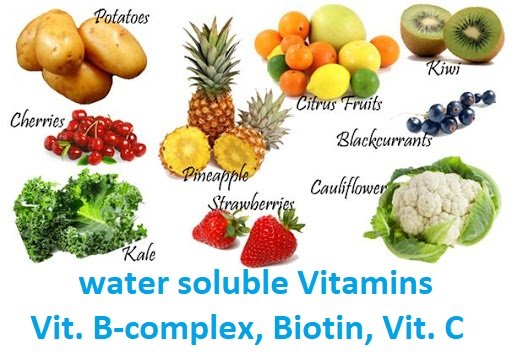
1. Ascorbic acid
2. Cyanocobalamin
3. Retinol
4. Calciferol
/सूची-I (विटामिन) को सूची-II (रासायनिक नाम) के साथ सुमेलित करें:
सूची-I
A. विटामिन A
B. विटामिन C
C. विटामिन D
D. विटामिन B12
सूची-II
1. एस्कॉर्बिक एसिड
2. सायनोकोबालामिन
3. रेटिनॉल
4. कैल्सीफेरॉल
Q100. Assertion (A): The pyramid of biomass in an aquatic ecosystem (like a pond) is usually inverted.
Reason (R): The standing crop of phytoplankton (producers) is much less than the biomass of zooplankton and small fishes feeding on them at any given time.
/अभिकथन (A): एक जलीय पारिस्थितिकी तंत्र (जैसे तालाब) में बायोमास (जैवभार) का पिरामिड आमतौर पर उल्टा (inverted) होता है।
कारण (R): किसी भी समय फाइटोप्लांकटन (उत्पादक) की खड़ी फसल (standing crop) उन पर भोजन करने वाले ज़ूप्लांकटन और छोटी मछलियों के बायोमास से बहुत कम होती है।

UKSSSC Pashudhan Prasar Adhikari (Livestock Extension officer) 2026

This test is part of a larger series. Explore other tests in this bundle.

₹79 ₹199
Buy Series

About this Assessment

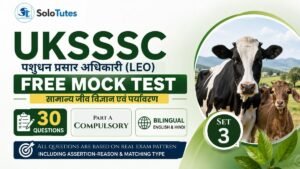
UKSSSC Pashudhan Prasar Adhikari Full-Length Mock Test (100 Questions)

This full-length mock test is based on the latest UKSSSC Livestock Extension Officer (Pashudhan Prasar Adhikari) exam pattern. It includes 100 objective questions in both English & Hindi, with clear explanations for every question.

Exam Pattern: The test includes normal multiple-choice questions along with Match the Following and Assertion-Reason questions to check your knowledge and understanding.

Test Structure

The mock test contains the following two sections:

  • Section A: General Biology & Environment (30 Questions)
    • Level: Senior Secondary (Class 12)
    • Coverage: Cell Biology, Biomolecules, Taxonomy, Plant Anatomy, Plant Physiology, Plant Reproduction, Ecology & Environmental Science, including cell structure and division, proteins, carbohydrates and fats, Five Kingdom Classification, angiosperm families, monocot and dicot anatomy, photosynthesis, respiration, transpiration, plant hormones, pollination, double fertilization, seed and fruit development, apomixis, parthenocarpy, polyembryony, pollution, biomagnification, eutrophication, ozone depletion, greenhouse effect, acid rain, Green Revolution, nitrogen cycle, apiculture, sericulture, crop pest management, and microbes in human welfare.
  • Section B: Biology (70 Questions)
    • Level: Graduation
    • Stream: Biology
    • Coverage: Cell Biology, Genetics, Molecular Biology, Plant Physiology, Human Physiology, Ecology, Taxonomy, Evolution, Biotechnology, DNA Replication, Transcription, C3 and C4 Photosynthesis, Plant Hormones, and other important graduation-level Biology topics.

Question Types

The test contains questions of Easy, Moderate, and Hard difficulty levels to give you exam-like practice.

  • Direct Concept MCQs: Questions based on important facts, concepts, and definitions.
  • Match the Following: Questions that test your ability to connect related terms, facts, and concepts.
  • Assertion-Reason: Questions that test your understanding of concepts and cause-and-effect relationships.

After completing the test, read the explanations carefully. They will help you find your weak areas, improve your concepts, and prepare better for the actual UKSSSC exam.

Prakash Joshi

Written & Verified by Prakash Joshi

Expert Faculty

Subject Matter Expert & Content Creator at Solotutes. Dedicated to providing highly accurate and syllabus-oriented study materials for your exam preparation.

💬 Discuss this Topic

Have a doubt or want to share something? Drop a comment below!

0 Discussion(s)

  1. No discussions yet. Be the first to share your thoughts!

Ready to Practice More?

Explore notes, one-liners, and other materials related to this topic.
📺 Watch & Learn

Visual explanations and related video classes.

Scroll to Top