
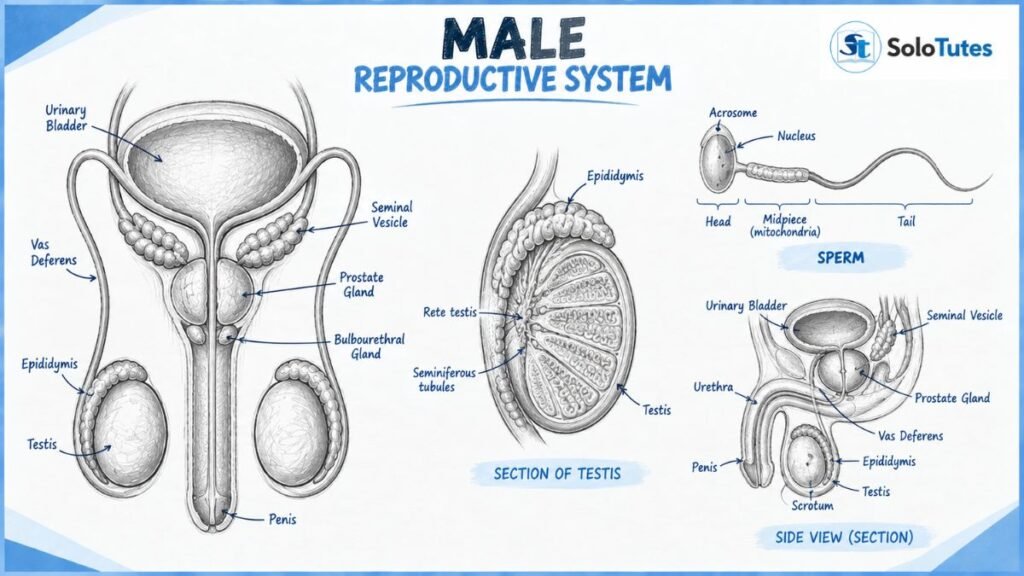
Human Male Reproductive System – Simplified Notes
1. Main Parts of the Male Reproductive System
The male reproductive system can be broadly divided into two groups:- External reproductive organs — Penis and Scrotum
- Internal reproductive organs — Testes, Epididymis, Vas deferens, Ejaculatory ducts, Urethra, and accessory glands
- Testes
- Scrotum
- Epididymis
- Vas deferens
- Ejaculatory ducts
- Urethra
- Penis
- Seminal vesicles
- Prostate gland
- Bulbourethral glands

2. External Male Reproductive Organs
Penis
Penis is the external copulatory organ of the male reproductive system. It also has a role in the urinary system because the urethra passes through it. The main anatomical regions of the penis are:- Root — the attached part of the penis
- Body or Shaft — the main elongated portion
- Glans penis — the enlarged distal end
- Prepuce or Foreskin — a fold of skin that may cover the glans
Scrotum
Scrotum is a skin-covered pouch that contains the two testes. Keeping the testes at a temperature slightly lower than the internal body temperature is important for normal spermatogenesis.3. Testes — Male Gonads

- Sperm production
- Testosterone secretion
Seminiferous Tubules
Seminiferous tubules are the main site of sperm production. Their lining contains developing germ cells at different stages along with Sertoli cells. Sertoli cells provide structural and nutritional support to developing sperm cells.Leydig Cells
Interstitial cells, also called Leydig cells, are present in the connective tissue between the seminiferous tubules. These cells mainly produce and secrete testosterone.4. Epididymis

- mature
- develop motility
- remain stored for some time
5. Vas Deferens
Vas deferens is a muscular tube that transports sperm from the epididymis. It carries sperm towards the pelvic cavity and later contributes to the formation of the ejaculatory duct.6. Ejaculatory Duct
Ejaculatory ducts carry sperm and secretions from the vas deferens and seminal vesicles towards the urethra.7. Urethra
Urethra is a tube that carries urine from the urinary bladder to the outside of the body. In males, the urethra also serves as the passage through which semen leaves the body.8. Male Accessory Reproductive Glands
The three major accessory reproductive glands are:- Seminal vesicles
- Prostate gland
- Bulbourethral glands
Seminal Vesicles
Seminal vesicles are a pair of glands that produce a major part of the fluid component of semen. Their secretion is rich in nutrients and contains fructose, which can provide an energy source for sperm.Prostate Gland
Prostate gland is located below the urinary bladder and surrounds the initial part of the urethra. Its secretion becomes part of semen and contributes to creating a suitable environment for sperm.Bulbourethral Glands
Bulbourethral glands, also called Cowper’s glands, produce a mucus-like secretion. This secretion helps lubricate the urethra and may help prepare the urethral passage before ejaculation.9. Difference Between Sperm and Semen
| Sperm | Semen |
|---|---|
| Sperm is the male gamete. | Semen is a fluid containing sperm and secretions from accessory glands. |
| Sperm are produced in the testes. | Semen contains secretions from the accessory reproductive glands. |
| Sperm is a haploid cell. | Semen is a reproductive fluid. |
10. Spermatogenesis — Sperm Formation
Spermatogenesis is the process by which male germ cells develop into mature spermatozoa. This process mainly occurs inside the seminiferous tubules of the testes.Spermatogonia
Spermatogonia are diploid germ cells that represent the earliest stage of sperm development.Primary Spermatocyte
A developing cell formed from spermatogonia is called a primary spermatocyte. It enters meiosis I.Secondary Spermatocyte
Secondary spermatocytes are formed after meiosis I. They undergo meiosis II and produce spermatids.Spermatids
Spermatids are not yet fully mature sperm cells. They undergo further structural changes during their development.Spermiogenesis
Spermiogenesis is the process in which spermatids undergo structural changes and develop into mature spermatozoa.11. Structure of Sperm
A mature sperm can be broadly divided into three main parts:- Head
- Middle piece
- Tail

Head
The head contains the haploid nucleus. Its anterior region contains the acrosome, which contains enzymes involved in fertilisation.Middle Piece
The middle piece contains many mitochondria. These mitochondria provide energy needed for sperm movement.Tail
The tail, or flagellum, helps the sperm move through the reproductive tract.12. Hormonal Regulation of Male Reproduction
Male reproductive function is mainly regulated by the Hypothalamus–Pituitary–Gonadal (HPG) axis.GnRH
Gonadotropin-releasing hormone (GnRH) is released by the hypothalamus. It stimulates the anterior pituitary gland to release the gonadotropins FSH and LH.FSH
Follicle-stimulating hormone (FSH) acts mainly on the Sertoli cells and supports spermatogenesis.LH
Luteinizing hormone (LH) stimulates Leydig cells, which increases testosterone production.Testosterone
Testosterone is the main male sex hormone. It is important for male reproductive development, support of spermatogenesis, and the development and maintenance of several secondary sexual characteristics.13. Male Secondary Sexual Characteristics
During puberty, rising testosterone levels lead to several physical changes, including:- Increased facial and body hair
- Deepening of the voice
- Increase in muscle mass
- Maturation of the male reproductive organs
- Sexual maturation
14. Biological Basis of Erection
During sexual arousal, changes in the nervous and vascular systems can increase blood flow into the erectile tissues of the penis. This increased blood flow can produce penile rigidity, known as an erection. Erection is a physiological response involving the brain, autonomic nervous system, blood vessels, and smooth muscle regulation.15. Ejaculation
Ejaculation is the physiological process in which semen is expelled from the body through the urethra. It involves coordinated activity of the nervous system and muscular contractions of the reproductive tract.16. Male Sexual Response
Sexual response is not limited to the reproductive organs. It involves the brain, nervous system, hormones, blood vessels, and psychological factors.Sexual Arousal
During sexual arousal, several physiological changes may occur, such as:- Penile erection
- Changes in heart rate and breathing
- Increased genital blood flow
- Changes in genital sensitivity
Orgasm
Orgasm is a phase of the sexual response that may involve rhythmic muscular contractions and an intense sensory experience. In male reproductive physiology, orgasm is often associated with ejaculation, although the two are not exactly the same physiological event.17. Coitus and Its Relation to Fertilisation
Coitus, or penile-vaginal intercourse, is one natural route through which sperm can enter the female reproductive tract. After ejaculation, sperm may travel through the vagina, cervix, and uterus. Some sperm may reach the uterine tubes.18. Relationship Between the Male Reproductive and Urinary Systems
The male reproductive and urinary systems share some anatomical structures. The most important example is the urethra.| Structure | Main Function |
|---|---|
| Testes | Sperm and testosterone production |
| Epididymis | Sperm maturation and storage |
| Vas deferens | Sperm transport |
| Seminal vesicles | Contribute nutrient-rich fluid to semen |
| Prostate gland | Contributes glandular secretion to semen |
| Bulbourethral glands | Produce lubricating secretion |
| Penis | Copulatory organ and passage for semen and urine |
| Scrotum | Holds the testes and helps with temperature regulation |
19. Puberty and Male Reproductive Maturation
During puberty, the HPG axis becomes more active. Testosterone production and spermatogenesis increase as the reproductive system matures. Common changes during this period include:- Maturation of the testes and reproductive organs
- Beginning of sperm production
- Increase in testosterone levels
- Growth of body and facial hair
- Deepening of the voice
- Changes in muscle and bone development
20. Complete Functional Pathway of the Male Reproductive System
21. Male Reproductive System — Concept Map
22. High-Yield Exam Points
- Testes = male gonads.
- Seminiferous tubules = main site of spermatogenesis.
- Sertoli cells = support developing sperm cells.
- Leydig cells = produce testosterone.
- Epididymis = sperm maturation and storage.
- Vas deferens = sperm transport.
- Seminal vesicles = major source of fructose-containing seminal fluid.
- Prostate gland = contributes important glandular secretion to semen.
- Bulbourethral glands = produce lubricating secretion.
- FSH = acts mainly on Sertoli cells and supports spermatogenesis.
- LH = stimulates Leydig cells.
- Testosterone = main male sex hormone.
- Sperm = haploid male gamete.
- Spermatogenesis = formation of sperm.
- Spermiogenesis = transformation of spermatids into mature spermatozoa.
23. Frequently Asked Questions
Q1. What is the primary reproductive organ in males?
Answer: The testes are the primary reproductive organs or gonads in males.Q2. Where are sperm produced?
Answer: Sperm are produced in the seminiferous tubules of the testes.Q3. Which cells produce testosterone?
Answer: Leydig cells in the testes mainly produce testosterone.Q4. Where does sperm maturation occur?
Answer: Sperm maturation occurs mainly in the epididymis.Q5. Are sperm and semen the same thing?
Answer: No. Sperm are male gametes, while semen is a reproductive fluid containing sperm along with secretions from the accessory reproductive glands.Q6. What is the difference between FSH and LH?
Answer: FSH acts mainly on Sertoli cells and supports spermatogenesis, while LH stimulates Leydig cells to produce testosterone.Q7. Why is temperature regulation important in the testes?
Answer: Sperm production works best at a temperature slightly below the normal internal body temperature. The scrotum helps maintain this suitable temperature.24. One-Minute Revision
Conclusion
The male reproductive system is a coordinated organ system responsible for gamete production, hormone secretion, sperm maturation, and sperm transport. The main pathway to remember is:
Ratings & Reviews
Share your experience and help other students.
Please log in to your SoloTutes account to rate and review this resource.
No reviews yet. Be the first to share your feedback.
Categorized Under:
More Study Notes on this Topic
Ready for More?
Test your knowledge with these related materials.
📺 Watch & Learn
Visual explanations and related video classes for better understanding.
🎥 Video Resources
Male Reproductive System | नर जनन तंत्र | Reproductive System | Anatomy and Physiology | Testicle

Male Reproductive System | नर जनन तंत्र | Reproductive System | Anatomy and Physiology | Testicle
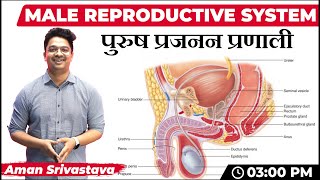
Male Reproductive System (नर प्रजनन प्रणाली) | All Govt Exams | Biology Special Class by Aman Sir
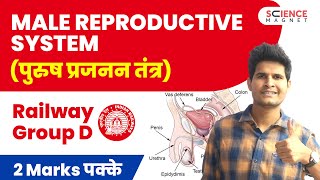
Railway Group D 🤩 Male Reproductive System (पुरुष प्रजनन तंत्र) | 2 Marks पक्के #neerajsir #group_d

पुरुष प्रजनन तंत्र | male reproductive system in hindi | reproductive system | Biology | Study vines

Male reproductive system | Part-1 | Male Accessory Glands | Organs | Structure | layers of Muscles

नर जनन तंत्र | Male Reproductive System | Class 12 Biology | Nidhi Ma’am | Board Exam
💬 Discuss this Topic
Have a doubt or want to share something? Drop a comment below!
0 Discussion(s)
You must be logged in to join the discussion.