Smart Online Assessments For Serious Exam Preparation
Start Assessment ➔

What do you want to learn today?

Home / Question Bank / Biology / Question Details
Q&A

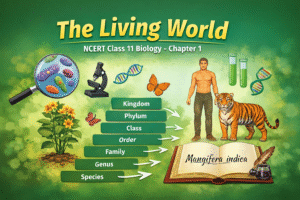
Q8. What is meant by the term ‘species’? Discuss its meaning in higher plants and animals and in bacteria.

A species is the basic unit of classification, defined as a group of organisms capable of interbreeding and producing fertile offspring under natural conditions. In higher plants and animals: Species are defined based on reproductive isolation and the ability to interbreed. In bacteria: Since reproduction is asexual, species are defined based on genetic similarity, biochemical characteristics, and DNA homology.
- Advertisement -

More Questions & Answers

Read the Complete Topic

This question belongs to the set "Class – XI Biology Chapter 1 NCERT Solutions – Q&A". Click below to read detailed notes and attempt the full quiz.

View Full Post →
Try These Similar MCQs

  • A Femur
  • B Tibia
  • C Humerus
  • D Radius
Explanation: Femur or thigh bone is the longest and strongest bone of the human body.
  • A Gluteus maximus
  • B Deltoid
  • C Biceps brachii
  • D Rectus femoris
Explanation: Gluteus maximus is the largest skeletal muscle and forms the bulk of the buttocks, responsible for hip extension and powerful movements like climbing.
  • A Meiosis
  • B Mitosis
  • C Binary fission
  • D Budding
Explanation: Mitosis produces two genetically identical diploid daughter cells.
  • A G1 phase
  • B S phase
  • C G2 phase
  • D M phase
Explanation: DNA replication occurs during the Synthesis (S) phase of interphase.
  • A Digestive system
  • B Lymphatic system
  • C Respiratory system
  • D Endocrine system
Explanation: The lymphatic system maintains fluid balance and supports immune defense.
  • A Ribosome
  • B Nucleus
  • C Mitochondria
  • D Lysosome
Explanation: Mitochondria generate ATP, the energy currency of the cell.
- Advertisement -

Explore Related Study Material


- Advertisement -

Scroll to Top