Smart Online Assessments For Serious Exam Preparation
Start Assessment ➔

What do you want to learn today?

Home / Question Bank / Biology / Question Details
Q&A

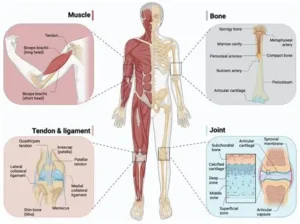
Compare and contrast the three types of muscles with examples.

- Skeletal muscles: Striated, voluntary, attached to bones, e.g., biceps and quadriceps. - Smooth muscles: Unstriated, involuntary, found in internal organs, e.g., stomach wall, intestines. - Cardiac muscles: Striated, involuntary, branched, found only in the heart. They differ in structure, control, and function, but all are essential for body movement and survival.
- Advertisement -

More Questions & Answers

Read the Complete Topic

This question belongs to the set "Musculoskeletal System – Important Questions and Answers (LAQs)". Click below to read detailed notes and attempt the full quiz.

View Full Post →
Try These Similar MCQs

  • A Autoimmune
  • B Hyper immunity
  • C Immunodeficiency
  • D All of above
  • A LOX pathway product
  • B Cytokinines
  • C Vasoactiveamines
  • D COX pathway product
  • A Rough Endoplasmic Reticulum
  • B Smooth Endoplasmic Reticulum
  • C Golgi body
  • D Lysosome
Explanation: The Smooth ER is responsible for the synthesis of lipids and steroids.
  • A Neuron
  • B Nephron
  • C Alveoli
  • D Villus
Explanation: Nephrons are the functional units of kidneys responsible for blood filtration and urine formation.
  • A Movement
  • B Infection
  • C Poor blood supply
  • D All of the above
  • A Diaphragm
  • B Triceps
  • C Biceps
  • D Quadriceps
Explanation: The diaphragm contracts and expands the chest cavity during breathing.
- Advertisement -

Explore Related Study Material


- Advertisement -

Scroll to Top