
rheumatoid arthritis
Table of Contents
RHEUMATOID ARTHRITIS
Rheumatoid arthritis (RA) is an autoimmune disease that results in a chronic, systemic inflammatory disorder that may affect many tissues and organs, but principally attacks flexible (synovial) joints. It can be a disabling and painful condition, which can lead to substantial loss of functioning and mobility if not adequately treated. The hallmark feature of this condition is persistent symmetric polyarthritis (synovitis) that affects the hands and feet, though any joint lined by a synovial membrane may be involved. Extra-articular involvement of organs such as the skin, heart, blood vessels, lungs and eyes can be significant. Although rheumatoid arthritis affects approximately 1% of world population. It can occur at any age, usually begins after age 40 (Peak incidence is between 4th and 6th decade). The disorder is much more common in women than in men. Genetic and autoimmune factors are mainly responsible for the initiation of disease process.
Etiology
The cause of RA is unknown. Genetic, environmental, hormonal, immunologic and infectious factors may play significant roles. Socioeconomic, psychological, and lifestyle factors (e.g., tobacco use, the main environmental risk) may influence disease outcome.
Immunologic factors: Rheumatoid arthritis occurs when immune system attacks the synovium, the lining of the membranes that surround joints. All of the major immunologic elements play fundamental roles in the initiation, propagation and maintenance of the autoimmune process of RA.
Genetic factors: Half of the risk for RA is believed to be genetic.It is strongly associated with the inherited tissue type major histocompatibility complex (MHC) antigen HLA-DR4 (most specifically DR0401 and 0404), and the genes PTPN 22 and PAD I4, hence family history is an important risk factor. Inheriting the PTPN22 gene has been shown to double a person’s susceptibility to RA. PADI4 has been identified as a major risk factor in people of Asian descent, but not in those of European descent. First-degree relatives prevalence rate is 2–3% and disease genetic concordance in monozygotic twins is approximately 15–20%.
Infectious agents: For many decades, numerous infectious agents have been suggested as potential causes of RA, including Mycoplasma organisms, Epstein- Barr virus (EBV), and rubella virus.
Hormonal factors: Sex hormones may play a role in RA, as evidenced by the disproportionate number of females with this disease, its amelioration during pregnancy, its recurrence in the early postpartum period, and its reduced incidence in women using oral contraceptives. Hyperprolactinemia may be a risk factor for RA.
Pathophysiology
The pathogenesis of RA is not completely understood. An external trigger (e.g., cigarette smoking, infection, or trauma) that triggers an autoimmune reaction, leading to synovial hypertrophy and chronic joint inflammation along with the potential for extra-articular manifestations, is theorized to occur in genetically susceptible individuals.
Synovial cell hyperplasia and endothelial cell activation are early events in the pathologic process that progresses to uncontrolled inflammation and consequent cartilage and bone destruction. Genetic factors and immune system abnormalities contribute to disease propagation.
Rheumatoid Arthritis and Joint Inflammation:
Joint inflammation is a hallmark of rheumatoid arthritis. That includes:
Stiffness: The joint is harder to use and might have a limited range of motion.“Morning stiffness” is one of the hallmark symptoms of rheumatoid arthritis. While many people with other forms of arthritis have stiff joints in the morning. People with rheumatoid arthritis take more than an hour (sometimes several hours) before their joints feel loose.
Swelling: Fluid enters into the joint and it becomes puffy; this also contributes to stiffness.
Pain: Inflammation inside a joint makes it sensitive and tender. Prolonged inflammation causes damage that also contributes to pain.
Redness and warmth: The joints may be somewhat warmer and more pink or red than neighbouring skin.
Other symptoms: RA can affect many areas of the body. These effects all result from the general process of inflammation, leading to a wide variety of symptoms of rheumatoid arthritis:
• Fatigue,
• Malaise,
• Loss of appetite, which can lead to weight loss,
• Muscle aches.
These feelings have been compared to having the flu, although they are usually less intense and longer lasting. Rheumatoid arthritis may affect other areas of body. Involvement of multiple areas of the body occurs and is more common with moderate to severe rheumatoid arthritis.
Treatments and Drugs
There is no cure for rheumatoid arthritis. Medications can reduce inflammation in joints in order to relieve pain and prevent or slow joint damage. Occupational and physical therapy helps how to protect joints. If joints are severely damaged by rheumatoid arthritis, surgery may be necessary.
Medications: Many drugs used to treat rheumatoid arthritis have potentially serious side effects.
NSAIDs: NSAIDs can relieve pain and reduce inflammation. (e.g. Aspirin, Fenoprofen, Piroxicam, Indomethacin etc.)
Steroids: Corticosteroid medications, such as prednisone, reduce inflammation and pain and slow joint damage. Side effects may include thinning of bones, cataracts, weight gain and diabetes.
Immunosuppressants: These medicat- ions act to suppress immune system, which is out of control in rheumatoid arthritis. Examples include cyclosporine, azothioprine, methotrexate. These medications can increase susceptibility to infection.
TNF-inhibitors: Tumor necrosis factor-alpha (TNF-α) is an inflammatory substance produced by body. TNF- inhibitors can help to reduce pain, morning stiffness and tender or swollen joints.
Surgery: If medications fail to prevent or slow joint damage, surgery requires repairing damaged joints. Surgery may help restore ability to use joint. It can also reduce pain and correct deformities.

Categorized Under:
More Study Notes on this Topic

📺 Watch & Learn
Visual explanations and related video classes for better understanding.
🎥 Video Resources
Rheumatoid arthritis - causes, symptoms, diagnosis, treatment, pathology

Rheumatoid arthritis - causes, symptoms, diagnosis, treatment, pathology
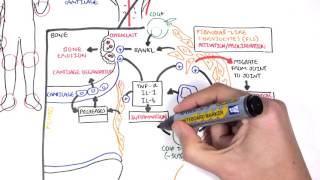
Rheumatoid Arthritis Pathophysiology (signs and symptoms)

Rheumatoid Arthritis (RA) Part 1: Introduction

What is Rheumatoid Arthritis? | Johns Hopkins Rheumatology

Rheumatoid Arthritis Animation

Rheumatoid Arthritis Nursing NCLEX Lecture: Symptoms, Treatment, Interventions, Medications