
The five kingdom Classification, characteristic features and differences.
Robert Whittaker has invented five-kingdom classification i.e., Monera, Protista, Fungi, Plantae, and Animalia. These are some important characteristic features of each kingdom.
Kingdom Monera:
1. The organism belonging to this group are prokaryotic, microscopic and unicellular.
2. They have a lack of cell organelles as well as they do not have a well-defined nucleus.
3. Some organisms can synthesis their own food (autotrophs) while some can’t synthesis their own food and are dependent on others for food known as (heterotrophs). · Cell wall is present in some of the organisms while absent in others.
4. Blue-green algae, bacteria and mycoplasma etc are found in this group of classification.
Kingdom Protista:
1. This group consists of many types of unicellular Eukaryotes.
2. They have both autotrophic as well as the heterotrophic mode of nutrition.
3. They have defined the nucleus as well as membrane-bound organelles.
4. The organism found in this group has appendages, like hair-like cilia or whip-like flagella for moving around and for locomotion.
5. Protozoan, diatoms and unicellular algae etc are found in this group of classification.
Kingdom Fungi:
1. They are Eukaryotic non-green, very simple organisms.
2. They also contain a cell wall that is made up of a tough complex sugar layer known as chitin.
3. They perform heterotrophic mode of nutrition.
4. Most of them are saprophytes (organisms who are dependent on dead and decaying organic plant and matter for food) and some are parasitic too.
5. Yeast, penicillium, and mucus etc are found in this kingdom.
Kingdom Plantae:
1. They are multicellular, eukaryotic organisms.
2. They have a cell wall made up of cellulose engrossed with other organelles.
3. Most of them have green pigment (chlorophyll), ultimately performs photosynthesis and thus known as autotrophs.
4. This kingdom is further classified as Thallophyta, Bryophyta, Pteridophyta, gymnosperms, and angiosperms.
Kingdom Animalia:
1. This kingdom posses multicellular eukaryotes without any cell wall, thus organelles are suspended in the given matrix inside the cell.
2. They are heterotrophic in nature.
3. They are further classified as Porifera, Coelenterata, Platyhelminthes, Nematoda, Annelida, Arthropoda, Mollusca, Ununchordata and Vertebrata.
4. They almost include all the animals.

Categorized Under:
More Study Notes on this Topic
Ready for More?
Test your knowledge with these related materials.

📺 Watch & Learn
Visual explanations and related video classes for better understanding.
🎥 Video Resources
The 5 Kingdoms in Classification | Evolution | Biology | FuseSchool
The 5 Kingdoms in Classification | Evolution | Biology | FuseSchool

5 Kingdom Classification - GCSE Biology (9-1)

Taxonomy: Life
The 6 kingdoms of Classification in 3 minutes
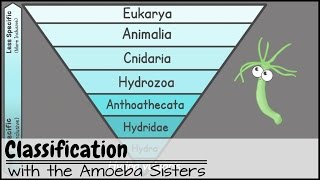
Classification

Five Kingdoms In 5 Minutes !