Smart Online Assessments For Serious Exam Preparation
Start Assessment ➔

What do you want to learn today?

Home / Question Bank / Biology / Question Details
Q&A

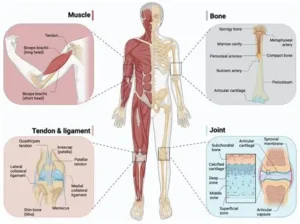
Compare and contrast the three types of muscles with examples.

- Skeletal muscles: Striated, voluntary, attached to bones, e.g., biceps and quadriceps. - Smooth muscles: Unstriated, involuntary, found in internal organs, e.g., stomach wall, intestines. - Cardiac muscles: Striated, involuntary, branched, found only in the heart. They differ in structure, control, and function, but all are essential for body movement and survival.
- Advertisement -

More Questions & Answers

Read the Complete Topic

This question belongs to the set "Musculoskeletal System – Important Questions and Answers (LAQs)". Click below to read detailed notes and attempt the full quiz.

View Full Post →
Try These Similar MCQs

  • A Hyperplasia
  • B Hypertrophy
  • C Hypoplasia
  • D Metaplasia
  • A Kidney
  • B Liver
  • C Pancreas
  • D Stomach
Explanation: The liver processes toxins, drugs and metabolic waste products.
  • A When the concentration of melanin is high in iris
  • B When the concentration of melanin is moderate
  • C When the concentration of melanin is very low
  • D none of the above
  • A Leptotene
  • B Zygotene
  • C Pachytene
  • D Diplotene
Explanation: Synapsis occurs during the Zygotene stage of Prophase I.
  • A Skull
  • B Rib
  • C Pelvis
  • D Clavicle
Explanation: The skull encases and protects the brain.
  • A Dendrite
  • B Axon
  • C Synapse
  • D Myelin
Explanation: Axons transmit nerve impulses away from the neuron cell body.
- Advertisement -

Explore Related Study Material


- Advertisement -

Scroll to Top