Smart Online Assessments For Serious Exam Preparation
Start Assessment ➔

What do you want to learn today?

Home / Question Bank / General Awareness (GA) / Question Details
One Liner

What are the geomorphic features of the plains?

Babar, Bhangar, Terai and Khadar
- Advertisement -

More Questions & Answers

Read the Complete Topic

This question belongs to the set "Important Questions on The Great Plains of India | Indian Geography". Click below to read detailed notes and attempt the full quiz.

View Full Post →

Try These Similar MCQs

  • A Arya Samaj
  • B Brahmo Samaj
  • C Ram Krishan Mission
  • D Prarthna Samaj
Explanation: On August 20, 1828, the first assembly of the Brahmo Sabha was held at Kolkata (Calcutta). This Sabha was convened by religious reformer Raja Ram Mohan Roy for his family and friends settled there. Brahmo Samaj is the monotheistic reformist movement of the Hindu religion that appeared during the Bengal Renaissance.
  • A William Pitt
  • B Charles Grey
  • C William Lamb
  • D Lord Palmerston
Explanation: Henry John Temple, 3rd Viscount Palmerston was a British statesman who served twice as a Prime Minister in the mid-19th century. Palmerston dominated British foreign policy during the period 1830 to 1865 when Britain was at the height of its imperial power. He held office almost continuously from 1807 until his death in 1865.
  • A King Charles II
  • B Queen Elizabeth I
  • C Queen Victoria
  • D Queen Mary
Explanation: On December 31, 1600, Queen Elizabeth I issued the Royal Charter to the East India Company. The British East India Company established trading facilities on the east and west coasts of India as well as in Bengal as a result of this Charter.
  • A Google
  • B OpenAI
  • C Microsoft
  • D Meta
Explanation: ChatGPT was developed by OpenAI as a conversational AI system.
  • A Parliament of India
  • B Chief Justice of India
  • C Governor
  • D State legislatures
Explanation: Article 3 assigns to Parliament the power to enact legislation for the formation of new States. Parliament may create new States in a number of ways, namely by (i) separating the territory from any State, (ii) uniting two or more States, (iii) uniting parts of States, and (iv) uniting any territory to a part of any State.
  • A 26th November 1949
  • B 26th November 1948
  • C 26th January 1950
  • D 26th November 1946
Explanation: The Constitution of India was adopted by the Constituent Assembly on 26th November 1949 and came into force on 26th January, 1950.
- Advertisement -

Explore Related Study Material

DESCRIBE THE INDIAN HISTORY iN SHORT NOTES? Note

DESCRIBE THE INDIAN HISTORY iN SHORT NOTES?

Jul 05, 20211.6k views View →
Famous Museums of India Note

Famous Museums of India

Dec 22, 20211.9k views View →
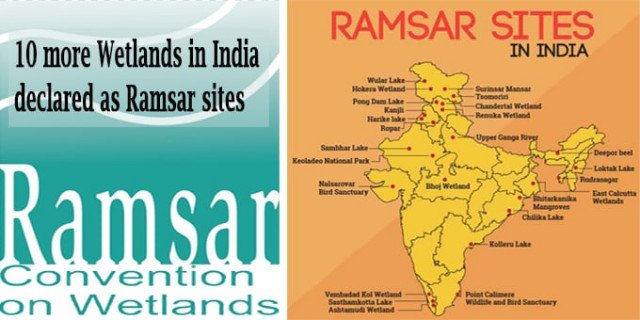
List of Ramsar Sites in India Note

List of Ramsar Sites in India

Dec 21, 20211.2k views View →

- Advertisement -

Scroll to Top