
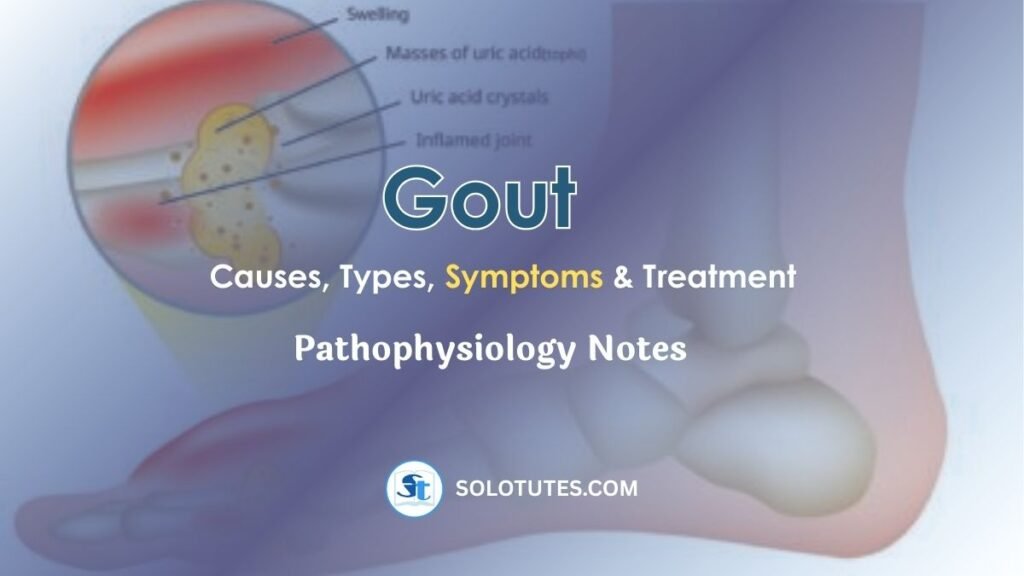
Gout: Causes, Symptoms, Pathophysiology and Treatment
Gout is a metabolic disorder characterized by elevated serum uric acid levels and deposits of urate crystals in synovial fluids and surrounding tissues in joints. It is a type of arthritis that involves sudden, severe attacks of joint pain accompanied by redness, warmth, and swelling in the affected area. Gout usually affects one joint at a time and most often strikes the joint of the big toe, known as podagra, though other toes may also be involved.
Major Causes of Gout (Hyperuricemia & Risk Factors)
Gout is caused initially by an excess of uric acid in the blood (hyperuricemia). Uric acid is produced through the breakdown of purines—chemical compounds found in certain foods such as meat, poultry, and seafood.
Normally, uric acid dissolves in the blood and is excreted through urine by the kidneys. When too much uric acid is produced or the kidneys fail to eliminate it efficiently, uric acid accumulates and forms needle-like crystals, leading to pain and inflammation in joints and surrounding tissues.
Several factors increase the likelihood of hyperuricemia and consequently gout:
Age and Gender: Men produce more uric acid than women. However, after menopause, uric acid levels in women become similar to men.
Genetics: A family history of gout increases the risk of developing the condition.
Lead Exposure: Chronic lead exposure has been linked in some cases to gout.
Medications: Certain medications, such as diuretics, salicylate-containing drugs, and niacin, can increase uric acid levels.
Weight: Being overweight increases the risk due to increased tissue breakdown, resulting in excess uric acid production.
Other Health Problems: Conditions such as renal insufficiency, hypertension, diabetes, and hypothyroidism impair waste removal, resulting in elevated uric acid levels.
Pathophysiology of Gout (How Uric Acid Crystals Form)
Gout is a disorder of purine metabolism and occurs when uric acid, its final metabolite, crystallizes as monosodium urate in joints, tendons, and surrounding tissues. These crystals trigger an immune-mediated inflammatory response, with interleukin playing a key role in the inflammatory cascade. Humans and higher primates lack uricase, an enzyme that breaks down uric acid, making gout more common.
The exact triggers for uric acid precipitation are uncertain. Although crystals can form at normal uric acid levels, they are more likely as levels increase. Other factors that may trigger an acute arthritis episode include cool temperatures, rapid changes in uric acid levels, acidosis, articular hydration, and extracellular matrix proteins such as proteoglycans, collagens, and chondroitin sulfate.
Rapid changes in uric acid may occur due to trauma, surgery, chemotherapy, diuretics, or starting/stopping allopurinol. Calcium channel blockers are associated with a lower gout risk compared with other hypertension medications.
Gout Treatment Options (Pain Relief & Long-Term Management)
The primary goals of gout treatment are rapid pain relief and prevention of future attacks and complications such as joint damage and kidney impairment.
NSAIDs: NSAIDs such as indomethacin, ibuprofen, naproxen, and etoricoxib help control inflammation and pain.
Colchicine: A pain reliever that effectively reduces gout pain, especially when taken shortly after symptoms begin.
Corticosteroids: Medications like prednisone reduce inflammation and pain. They may be taken orally or injected into the affected joint and are typically reserved for patients unable to take NSAIDs or colchicine.
Medications that Improve Uric Acid Removal: Probenecid enhances the kidneys’ ability to eliminate uric acid, lowering uric acid levels but increasing its concentration in urine.
Pegloticase: Used for long-standing, treatment-resistant gout.
Common Symptoms of Gout (Signs to Identify an Attack)
Common symptoms of gout include:
- Severe joint pain
- Redness and swelling
- Warmth in the affected joint
- Bone erosion (in chronic cases)
- Most commonly affects the big toe